

Blog
Nicotine Pouch Flavors: Test Six Sensory Families Safely in Australia

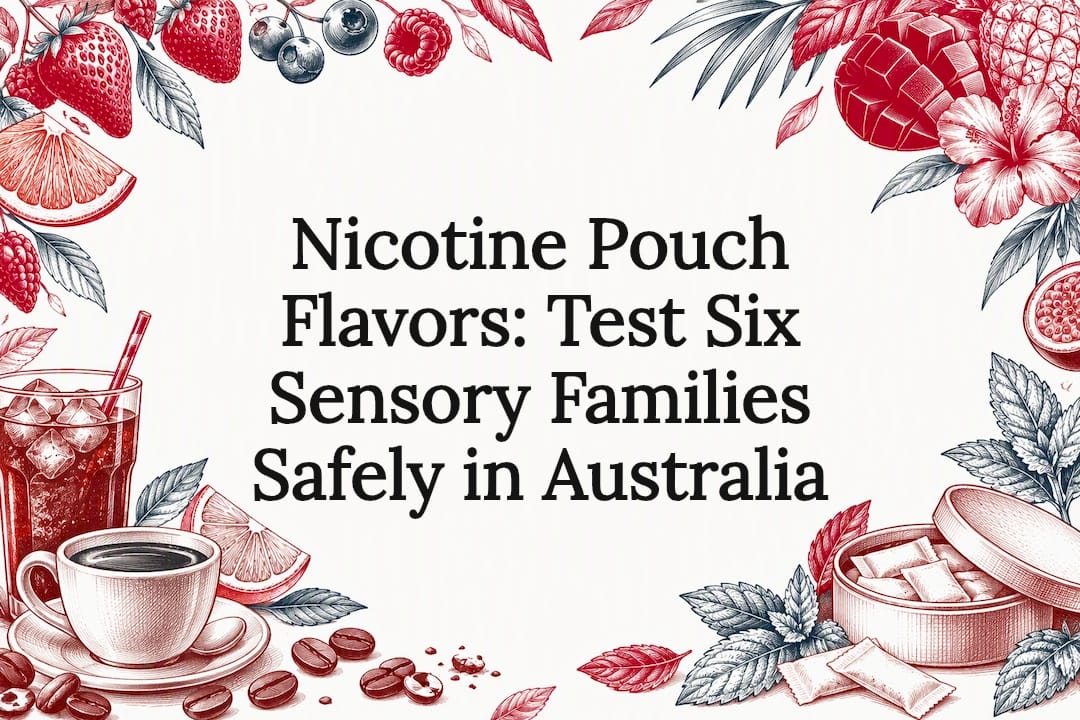
Mint, fruity, citrus, coffee, spice, and unflavoured are the six flavour families you’ll find across the nicotine pouch market, and picking between them comes down to nicotine strength, mouthfeel, and how long you want the taste to last. Stronger flavours tend to pair better with higher-strength pouches because they mask harshness, while milder families suit lower doses and daytime use. In Australia, remember that nicotine pouches sit outside routine Therapeutic Goods Administration approval unless prescribed, so flavour choice is only half the picture.
TL;DR:
- Flavors like mint, fruit, citrus, and dessert vary in strength, masking nicotine bitterness or affecting perceived duration, so choose based on your tolerance and occasion.
- Mint is the safest starting point for beginners, with different variants offering sharper, sweeter, or fruity sensations that mask harshness at higher strengths.
- Sweet fruit flavors can mask nicotine more effectively, but high-sugar blends may lead to underestimating your actual nicotine intake.
- Flavour intensity interacts with nicotine strength and pH, making stronger pouches taste harsher, especially at higher doses, which requires careful trialing.
- Regulatory status in Australia means nicotine pouches are illegal without prescription, and unregulated products may contain undeclared substances or inconsistent nicotine levels.
Table of Contents
- Mint and menthol flavours: what to expect
- Fruit flavours: berries, tropicals and hybrids
- Citrus and tropical flavours: brightness and zing
- Beverage and dessert flavours: coffee, cola, sweet treats
- Spicy, cinnamon and tobacco-like flavours
- Unflavoured, ‘smooth’ and synthetic cooling agents
- How flavour interacts with nicotine delivery: strength, pH and mouthfeel
- Safety, labelling and the regulatory picture for nicotine pouches
- How to choose flavours: quick plan for trying pouches safely
- Trends shaping new and seasonal nicotine pouch flavours
- How flavour preferences vary by demographic and region
- The impact of flavour on how satisfied users actually feel
- Comparing flavour offerings and innovation across brands
- Why flavour choice deserves more scrutiny than it gets
- Where to find these flavours if you’re ready to buy
- Sources
- FAQ
Mint and menthol flavours: what to expect
Mint is the benchmark flavour family, and for good reason. It’s the one most manufacturers get right first, and it’s usually the safest starting point if you’ve never tried a pouch before.
Peppermint delivers a sharper, almost medicinal edge. Spearmint is rounder and sweeter, closer to chewing gum than toothpaste. Wintergreen sits somewhere between the two, with a slightly fruity undertone that some users find less harsh on the gum line. The cooling sensation you feel isn’t always from menthol itself. Many pouches now lean on synthetic coolants layered underneath a mint flavour base to intensify the “icy” hit without needing more menthol extract.
- Peppermint: strong, cooling, slightly medicinal
- Spearmint: sweeter, softer on the palate
- Wintergreen: mellow with a faint fruit note
- Mint variants generally mask nicotine bitterness well, making them forgiving at higher strengths
Start with a low or medium strength mint pouch first. Mint has a habit of extending perceived duration because the cooling sensation lingers even after the nicotine itself has tapered off, which can trick you into leaving a pouch in longer than intended.
Fruit flavours: berries, tropicals and hybrids
Fruit pouches split into two rough camps: those chasing a natural, tart berry profile and those going full confectionery with candy-like blends. Blueberry, raspberry, and blackcurrant tend to sit in the first camp, offering a slightly sour, less processed taste. Watermelon, mango, and mixed tropical blends usually lean sweeter and more artificial, closer to a soft drink than actual fruit.
Sweetness does something worth knowing about: it masks the taste of nicotine far more effectively than mint does. That’s not necessarily a problem, but it means a heavily sweetened fruit pouch at a high strength can feel deceptively smooth, which makes it easier to underestimate how much nicotine you’re actually taking in.
- Berry blends: tarter, slightly natural-tasting
- Tropical and candy blends: sweeter, more artificial
- Sweetness increases palatability but reduces your sense of nicotine strength
- Good starter pick: a mid-strength berry pouch rather than a heavily sweetened tropical one
If you’re newer to pouches and want fruit without losing track of dosage, a single-note berry flavour gives you a clearer read on strength than a multi-fruit blend.
Citrus and tropical flavours: brightness and zing
Citrus pouches trade sweetness for acidity, and that changes the mouthfeel noticeably. Lemon and lime deliver a sharp, palate-cleansing bite. Bergamot, less common but growing in popularity, adds a slightly floral, tea-like complexity that’s more subtle than straight citrus.
Acidity affects how a pouch feels against the gum. Higher-acid profiles can read as “brighter” or fresher, but they can also feel sharper on sensitive gums compared with a smoother mint or fruit base. That’s worth knowing if you’ve had irritation issues with other flavour families before.
- Lemon and lime: sharp, refreshing, palate-cleansing
- Bergamot: floral, less acidic bite than straight citrus
- Tropical citrus blends (orange, pineapple, passion fruit): softer acidity, more rounded sweetness
- Citrus works well as a mid-afternoon “reset” flavour after something heavier like coffee or spice
Citrus tends to suit occasions where you want something crisp rather than comforting. Think of it as the palate-cleanser of the flavour world.
Beverage and dessert flavours: coffee, cola, sweet treats
Coffee and espresso pouches deliver a roasted, slightly bitter profile that’s designed to balance rather than mask the nicotine itself. That bitterness is doing real work: it keeps the flavour from tipping into cloying territory the way some dessert pouches can.
Cola and other beverage-inspired flavours sit in a different lane, closer to fizzy drink syrup than actual bitterness. Dessert-style pouches, think vanilla custard, caramel, or churro, push sweetness even further.
- Coffee/espresso: roasted, bitter-forward, less sweet than most other families
- Cola and soft drink notes: syrupy, sweeter, more mainstream appeal
- Dessert blends (vanilla, caramel): very sweet, can mask nicotine strength significantly
- Best used later in the day when a stronger, more indulgent flavour suits the moment
If you’re keeping an eye on total nicotine intake across a day, dessert-style sweetness is worth watching. It’s the flavour family most likely to make a strong pouch taste deceptively mild.
Spicy, cinnamon and tobacco-like flavours
This is the family built for people who want something with more weight on the palate. Cinnamon delivers immediate warmth and a peppery bite that lingers well past the point where a mint pouch would have faded. Tobacco-adjacent blends aim for a more traditional, earthy profile, often with a smoky or leathery undertone rather than any sweetness at all.
- Cinnamon and spice blends: warm, peppery, long aftertaste
- Tobacco-style profiles: earthy, smoky, minimal sweetness
- These flavours pair naturally with higher-strength pouches because the intensity of the spice holds up against stronger nicotine
- Expect a noticeable adjustment period if you’re used to mint or fruit
If you’re moving into this family from something milder, give your palate a few sessions to adjust. The warmth and bite can feel overwhelming at first, especially at higher strengths, before it settles into something you actually look forward to.
Unflavoured, ‘smooth’ and synthetic cooling agents
“Unflavoured” or “smooth” on a pouch label doesn’t always mean flavourless in the strict sense. It usually means the manufacturer has stripped back added taste compounds while keeping a neutral base, sometimes with a faint natural tobacco-leaf note still present.
Here’s the part most people miss: some of these “smooth” pouches still deliver a cooling sensation, even without menthol. That’s down to synthetic coolants like WS-3 and WS-23, compounds detected in chemical analyses of post flavour-ban pouches that trigger the same cold receptors menthol does, without any minty smell or taste attached.
Pro Tip: If you want to isolate how nicotine strength alone feels, without flavour skewing your perception, start with an unflavoured or smooth pouch before working through the flavoured families.
- Unflavoured/smooth: minimal added taste, sometimes a faint tobacco note
- Synthetic coolants (WS-3, WS-23): deliver cooling without menthol odour
- Best used as a baseline trial before comparing flavoured options
- Useful for anyone sensitive to strong scent or taste additives
Randomised trial data backs up why most people skip past unflavoured pouches entirely: flavoured varieties, particularly mint, menthol, and citrus, rate consistently more appealing than smooth options among young adult users, and that appeal gap is large enough to shape real purchasing habits.
How flavour interacts with nicotine delivery: strength, pH and mouthfeel
Flavour doesn’t operate independently of nicotine strength. It sits on top of a chemical interaction that shapes how harsh or smooth a pouch actually feels in your mouth.
Controlled research backs this up directly. Higher nicotine concentrations tend to reduce overall appeal and increase harshness, according to experimental data on pouch formulation. That’s a big part of why strong pouches lean on bolder flavours like cinnamon or coffee rather than delicate ones like citrus. A subtle flavour simply can’t cover the roughness that comes with a higher milligram count.
pH adds another layer, and it’s not a straight line. The same research found palatability peaks somewhere in the middle of the pH range rather than at either extreme, meaning a pouch engineered to be too alkaline or too acidic can taste worse regardless of how much flavouring is added.
The practical takeaway is simple: if you’re stepping up in strength, don’t assume your favourite mild flavour will scale with it. A citrus or berry pouch that tastes great at a lower strength can turn sharp or chemical-tasting at a higher one. Spice, cinnamon, and coffee profiles tend to hold their character better as strength increases, which is why you’ll see them clustered at the stronger end of most product ranges.
Safety, labelling and the regulatory picture for nicotine pouches
Nicotine pouches occupy a genuinely tricky legal position in Australia. The TGA has stated plainly that these products are illegal to sell or possess without a prescription, and none of them have gone through TGA evaluation for quality, safety, or efficacy. That’s a materially different standard from TGA-approved nicotine replacement therapies, which remain the only regulated cessation aids available.
Beyond the legal status, there are practical safety concerns worth taking seriously. Nicotine content in unregulated products can vary from what’s printed on the label, and some pouches have been found to contain undeclared substances that aren’t disclosed on packaging. Flavoured packaging, particularly the fruit and dessert varieties, also raises genuine child-safety concerns given how closely some designs resemble confectionery or breath mints.
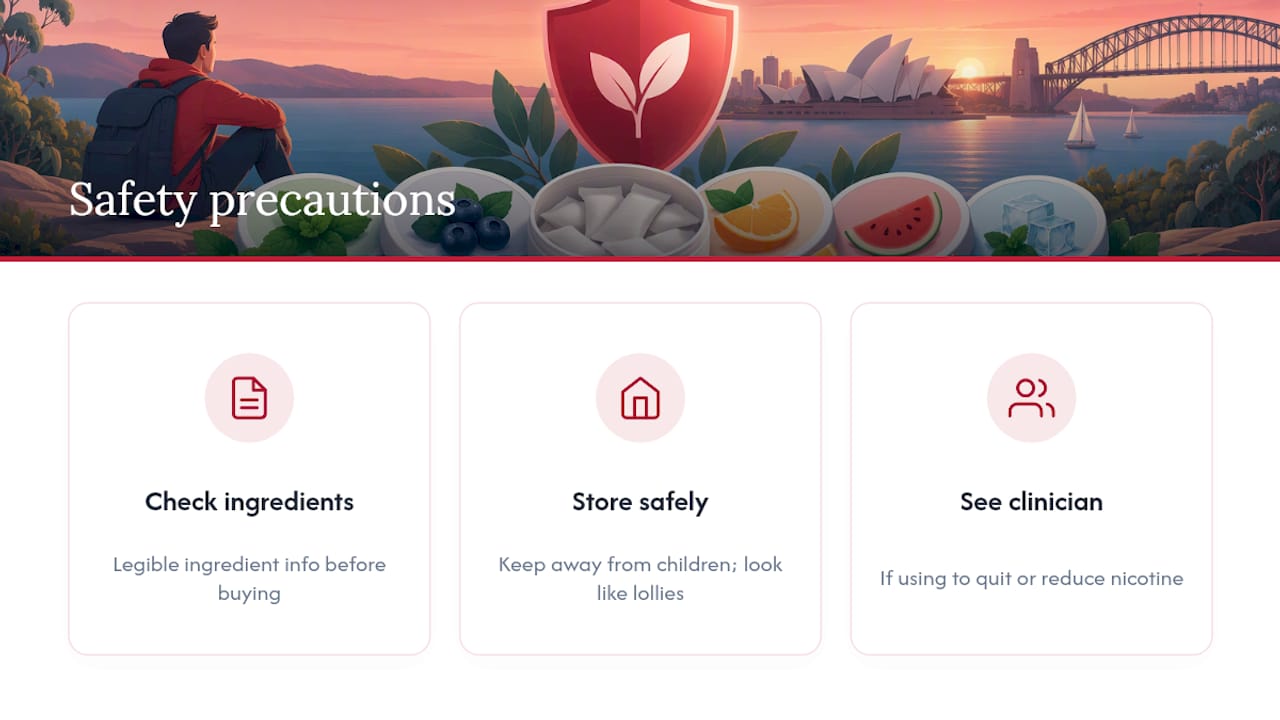
A few sensible precautions apply regardless of which flavour you’re drawn to: check for clear, legible ingredient information before buying, store pouches well away from children given how easily flavoured products can be mistaken for lollies, and speak with a clinician if you’re using pouches as part of a broader plan to quit smoking or reduce nicotine intake. Flavour choice matters, but it should never come ahead of these basics.
How to choose flavours: quick plan for trying pouches safely
Working through flavour families methodically beats grabbing whatever’s on special. A simple trial approach gives you a much clearer picture of what actually suits your habits.
- Pick one pouch from a flavour family and use it in isolation, noting how long it takes to feel the effect and how long the flavour itself lasts.
- Match the flavour to the occasion. Mint at low to medium strength suits work hours; coffee or spice suits a slower afternoon or evening session.
- Track any adverse effects, gum irritation, headache, nausea, before adjusting strength or trying a new family.
- Dispose of used pouches responsibly and keep unused ones sealed and out of reach of children.
Pro Tip: Keep a strength constant while you’re testing flavours, and keep a flavour constant while you’re testing strength. Changing both at once makes it almost impossible to know which variable is actually causing a reaction.
This kind of structured trial matters more than it sounds. Flavour and strength interact in ways that aren’t always predictable, and the only way to find your actual preference is to isolate one variable at a time.
Trends shaping new and seasonal nicotine pouch flavours
Flavour innovation in this category moves fast, and a lot of it borrows directly from the beverage and confectionery industries rather than inventing anything new from scratch. Cold brew coffee, energy drink inspired blends, and layered fruit combinations, think mango chilli or raspberry lime, have become common as brands chase variety beyond the standard single-note options.
Seasonal releases follow a predictable rhythm too. Warmer months tend to bring a spike in citrus and tropical fruit variants, while cooler months see more cinnamon, spiced apple, and coffee-forward releases hit shelves. It mirrors what happens in the broader flavoured beverage market almost exactly, and it’s not a coincidence. Manufacturers are clearly reading consumer mood the same way soft drink and confectionery brands do.
Cooling technology is where most of the genuine innovation is happening right now. Rather than relying purely on menthol, brands are increasingly stacking synthetic coolants with fruit or dessert bases to create hybrid sensations, a cold raspberry pouch, for instance, that delivers sweetness and an icy hit simultaneously without tasting like a mint product at all. It’s a workaround that lets flavour houses keep pushing “cooling” as a selling point even as pure menthol variants become less dominant in some ranges.
Market data from Nordic snus markets, while not a direct read on Australian preferences, still shows how entrenched mint and menthol remain as a category anchor even amid all this flavour experimentation. Mint and menthol variants are among the most popular flavours in Nordic markets, which suggests that novelty flavours tend to supplement rather than replace the reliable core options most users default to.
How flavour preferences vary by demographic and region
Flavour preference isn’t uniform, and age is one of the clearest dividing lines. Fruity and dessert style pouches consistently draw stronger interest from younger adult users, which is part of why health authorities have flagged flavour as a functional design element rather than a neutral add-on. Regulators have specifically noted that flavourings increase product appeal and use intentions in this age group, which is a big part of the reasoning behind tighter marketing scrutiny in several markets.
Older users, by contrast, tend to gravitate toward mint, tobacco-adjacent, or unflavoured options more often, profiles that read as more traditional or closer to what they may have experienced with other nicotine products in the past.
Regional variation shows up too, though it’s shaped as much by local manufacturing and distribution as by genuine taste preference. Nordic markets, where the pouch category originated, still lean heavily mint and tobacco-forward. Markets where pouches arrived more recently, including Australia’s grey and prescription channels, tend to see a broader spread across fruit, citrus, and dessert categories, largely because newer entrants to the category are less anchored to a single traditional flavour expectation.
Gender differences are less clearly documented in the available research, but anecdotal patterns across retail data suggest fruit and citrus categories see more balanced interest across genders than the more traditional tobacco and mint profiles, which have historically skewed toward longer-term users transitioning from other nicotine products.
The impact of flavour on how satisfied users actually feel
Flavour isn’t a cosmetic detail bolted onto a nicotine delivery mechanism. It’s one of the biggest levers affecting whether someone sticks with a product at all. Trial data makes this explicit: flavoured pouches score meaningfully higher on appeal than unflavoured ones, and certain flavours drive stronger use intentions than others in controlled testing environments.
That appeal gap has real downstream effects on user experience. A pouch that tastes unpleasant, too harsh, too chemical, too sweet, gets used inconsistently or abandoned outright, regardless of how well-calibrated its nicotine strength might be. Conversely, a well-matched flavour can make a genuinely strong pouch feel more manageable, because taste satisfaction and perceived harshness are closely linked rather than separate experiences.
There’s a flip side worth naming honestly. When sweetness or strong flavouring masks how much nicotine is actually being delivered, satisfaction and awareness can pull in opposite directions. Someone might report a pouch as “smooth” or “easy” purely because the flavour did its job, while the nicotine content underneath tells a different story. That’s precisely why flavour should inform your choice, but never substitute for actually reading the strength on the label.
Duration expectations tie in here too. Mint and coolant-heavy pouches often feel like they last longer because the sensory cooling persists after the nicotine effect has faded, which shapes user satisfaction independently of the actual pharmacological timeline.
Comparing flavour offerings and innovation across brands
Brands differentiate primarily through flavour breadth and how they execute core categories, since the underlying nicotine delivery format is fairly standardised across the category. Some ranges lean heavily into classic, tightly curated lineups, a handful of mint strengths, one or two fruit options, minimal dessert or novelty flavours. Others push toward broader variety, stacking six or more distinct fruit blends alongside coffee, spice, and hybrid cooling options in a single range.
Where genuine innovation shows up is in execution rather than novelty for its own sake. A well-formulated citrus pouch that manages acidity without turning harsh, or a coffee blend that balances bitterness against sweetness properly, represents more meaningful brand differentiation than simply adding another flavour name to a catalogue. Practitioners who study pouch formulation classify flavours into functional families, tobacco, menthol/mint, fruity, dessert, beverage, herbal/spice, and mixed blends, precisely because execution within a family matters more than the raw count of flavours a brand offers.
Packs that bundle mixed flavours, rather than committing to a single note, have become a practical way for brands to let users sample across families without buying multiple full packs. That approach suits anyone still working out which family actually fits their habits, since it sidesteps the guesswork of committing to one flavour blind.
Why flavour choice deserves more scrutiny than it gets
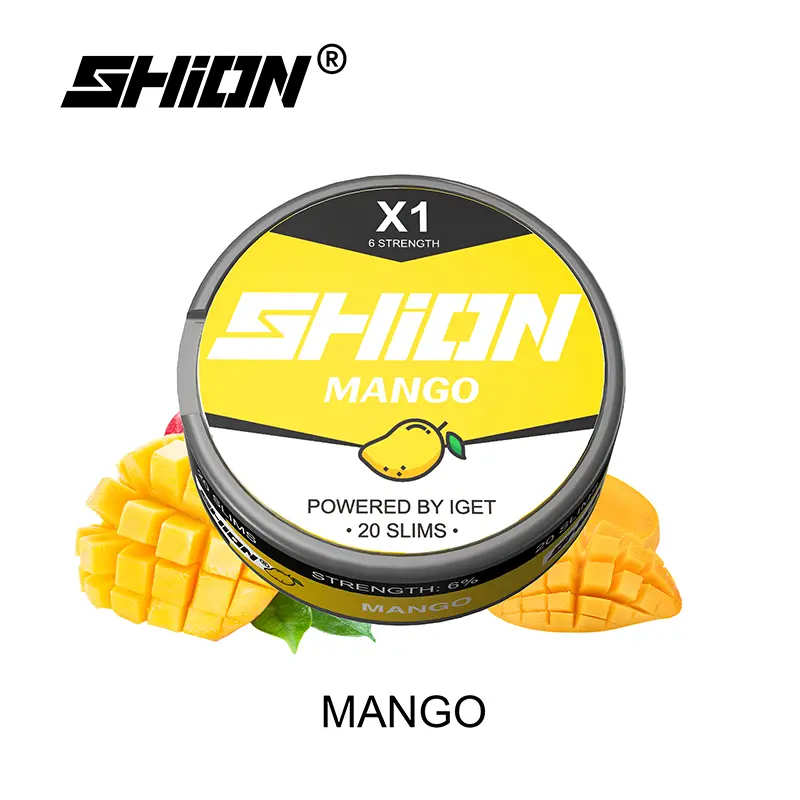
Most guidance on nicotine pouches treats flavour as an afterthought, a preference question you settle once and move past. That’s backwards. The evidence throughout this piece points to flavour functioning as an active design lever, one that shapes how much nicotine you take in, how long you keep a pouch in, and whether you notice harshness that should be telling you something about strength.
The uncomfortable truth is that the most “pleasant” pouch isn’t always the safest choice for a given user. Sweetness and strong cooling agents are remarkably good at disguising a rough, high-strength product, and that’s precisely the combination worth treating with more caution rather than less. If a pouch tastes suspiciously smooth at a strength that should feel harsh, that’s not a product working in your favour. It’s a flavour doing its job a little too well.
What actually helps is what regulators and researchers keep circling back to: pay attention to strength independently of taste, don’t let a pleasant flavour substitute for reading the label, and treat flavour trials as a genuine information-gathering exercise rather than just a shopping decision. That discipline matters more with nicotine pouches than with almost any other flavoured product, given how directly taste and dosage awareness are linked here.
— Alison
Where to find these flavours if you’re ready to buy
If you’ve worked through the flavour families and know roughly what you’re after, mint, fruit, citrus, or something bolder, a range sourced directly from authorised distributors is available, so what’s on the label matches what’s actually in the pouch. Products ship from an Australian based warehouse, with free express shipping on orders over a high order value, and expert guidance is available to help beginners and experienced users alike figure out strength and format before they buy.
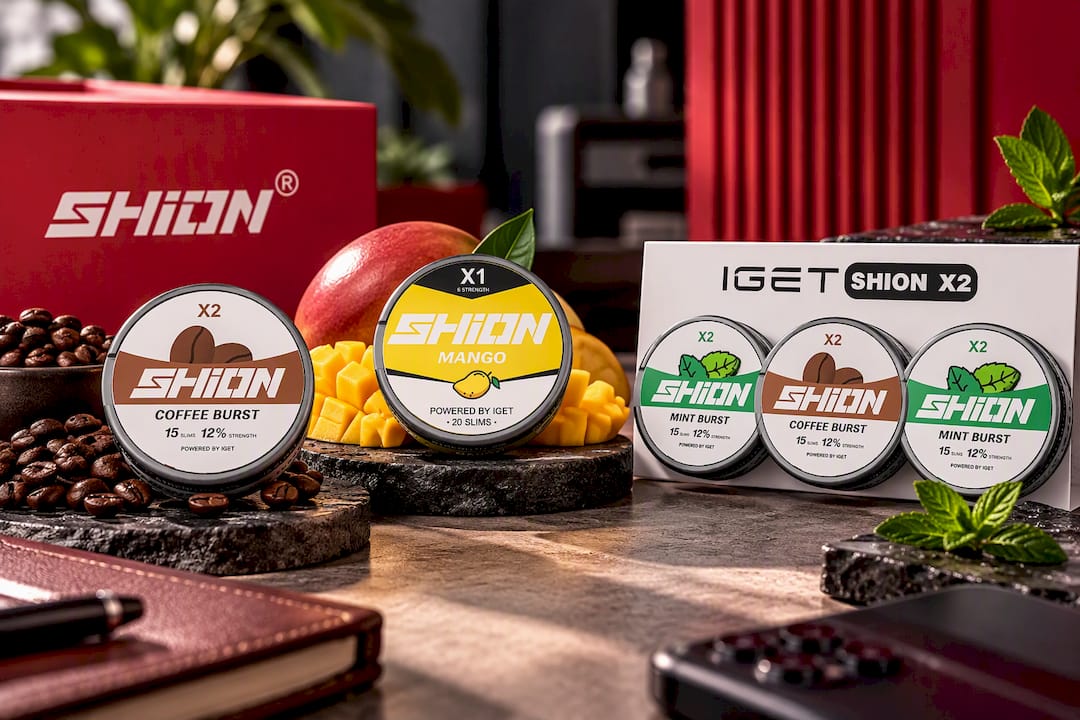
Among the current range, the IGET SHION X2 Nicotine Pouch is worth a look if you’re after a well-rounded flavour lineup, while the IGET SHION X1 Nicotine Pouch suits anyone wanting a slightly different format at a comparable strength. If you’re still narrowing down which flavour family suits you, the IGET SHION X2 Nicotine Pouch Bundle (3PCS) lets you sample across options without committing to a single pack. You can also browse ZYN pouch varieties or VELO’s flavour range for more mint and citrus options, and check the wider nicotine pouch selection for everything currently in stock. Before buying, check your local laws around nicotine pouches and speak with a clinician if you’re using them as part of a plan to quit or reduce smoking. Backed by over 12,000 verified customer reviews and a straightforward return policy, browsing the current range is the easiest next step if you’re ready to try a specific flavour for yourself.
This article is general information, not a substitute for advice from a qualified doctor. Consult a qualified healthcare professional about your own circumstances before acting on anything here.
Sources
- Effects of flavour and modified risk claims on nicotine pouch perceptions and use intentions among young adults
- Effects of nicotine concentration and pH on nicotine pouch appeal and sensory experience
- Pre- and post-flavor ban oral nicotine pouches: a chemical, sensory, and young adult appeal analysis
FAQ
What is the best flavour nicotine pouch?
There’s no single “best” flavour since it depends on strength tolerance and occasion, but trial data consistently shows mint, menthol, and citrus rate as the most appealing across controlled testing with young adult users. Auecigstore stocks all of these families, so starting with a mint or citrus option is a reasonable, well-supported first choice.
Why did Australia restrict nicotine pouches?
The TGA classifies nicotine pouches as illegal to sell or possess without a prescription because they haven’t been evaluated for safety or efficacy and have been found to sometimes contain undeclared substances. Regulators have also raised concerns about flavoured packaging appealing to young people.
How unhealthy are nicotine pouches?
Nicotine pouches deliver nicotine directly through the gum, and nicotine itself is addictive regardless of format or flavour. Because these products sit outside TGA evaluation in Australia, there’s no independent verification of exact nicotine content or ingredient safety on any given pack, which adds a layer of uncertainty beyond nicotine’s own known risks.
Is using two strong pouches a day too much?
There’s no universal safe threshold, since tolerance, pouch strength, and individual nicotine sensitivity all vary significantly between users. If you’re concerned about your intake or considering pouches as part of quitting smoking, speak with a clinician rather than relying on a fixed daily number, since TGA-approved nicotine replacement therapies remain the only regulated cessation option in Australia.
Recommended
- Velo Nicotine Pouches
- ZYN Nicotine Pouches
- Lucy Nicotine Pouches (6-Mix pack)
- Lucy Breakers Nicotine Pouches (6-Mix pack)
Written with the help of BabyLoveGrowth

